


The Sailor Who Fell From Grace With The Sea
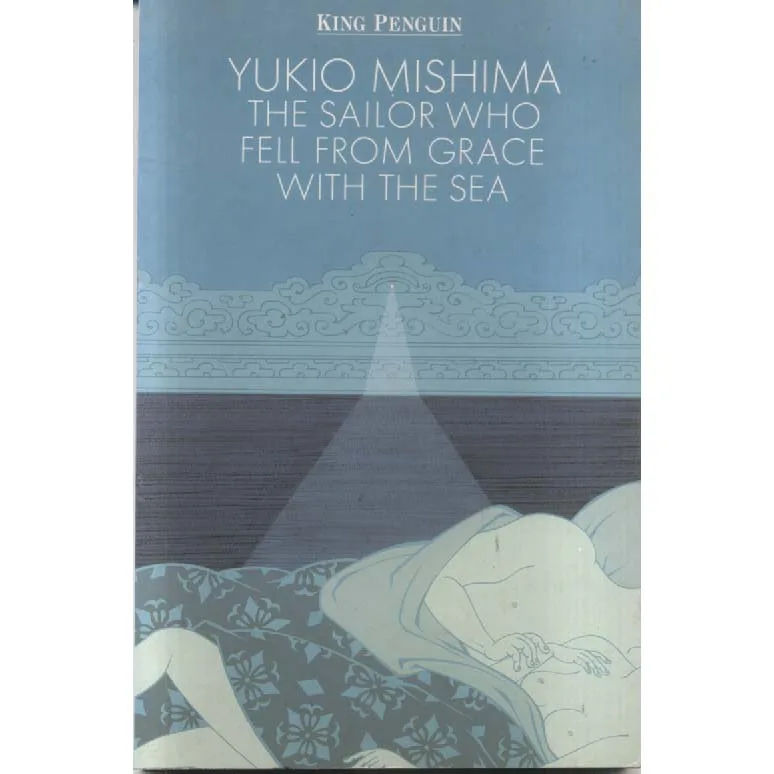
Publisher: Penguin Books
Format: Paperback
ISBN: 9780140060232
Yukio Mishima’s The Sailor Who Fell from Grace with the Sea begins with the sea, which in literature is rarely content to remain decorative, and a sailor, who makes the mistake of becoming human in front of people who preferred him as an idea. Noboru, a thirteen-year-old boy with a hard little private kingdom of theories, watches his widowed mother begin a relationship with Ryuji, a merchant seaman who seems at first to carry the glamour of distance, salt, danger and heroic absence. Unfortunately, reality has a vulgar habit of walking indoors and taking off its shoes.
Ryuji is at his most impressive when he belongs to the horizon. As long as he is attached to ships, departures, storms, masculine myth and the great blank poetry of the sea, he can remain magnificent. But when he comes ashore, considers domestic life, and begins to drift toward ordinary happiness, the spell begins to curdle. To Noboru and his circle of schoolboy absolutists, this is not romance or maturity or the natural wish of a lonely man to stop sleeping in bunks. It is betrayal. The sailor has fallen from grace by becoming available for breakfast.
The boys are one of Mishima’s colder inventions: clever, cruel, intense, half-formed and already horribly certain. They have the pristine brutality of adolescents who have discovered ideas before mercy. Adult life, with its compromises, affections and furniture, appears to them as a kind of contamination. They want purity, glory, hardness, destiny, and all the other dangerous nouns that become especially alarming when handled by children with no patience for the actual mess of being alive.
Mishima turns a small domestic triangle into something ritualistic and unnerving. A mother, a son, a sailor, a bedroom, a ship, a gang of boys, a private code: nothing here is large in the ordinary plot-summary sense, yet everything feels loaded, formal and dangerous. The novel has the spare precision of a blade laid carefully on a table. It is beautiful, but not kind; controlled, but not comforting; short enough to look harmless and sharp enough to make that seem like a trick.
This is literary fiction with the windows open to salt air and moral ruin. It asks what happens when romantic ideals are treated as more real than people, and when the ordinary tenderness of life is judged by those who have mistaken severity for truth. The answer, as one might expect from Mishima, is not a picnic. Nobody here is allowed the luxury of being merely unhappy; they must become symbolic, which is generally fatal to morale.
Near Fine copy, as sold by Crappy Old Books. A very presentable Penguin edition of a small, elegant catastrophe: sailor, sea, mother, boy, myth, disappointment, and the terrible danger of coming ashore when someone preferred you as a legend.
Keep browsing: See more Fiction books Other books by Yukio Mishima
